
Project Update: Prescribed Burnings Scheduled
MCWD, in partnership with Minnesota Native Landscapes, will conduct a series of prescribed burns across three locations in the upper watershed this Spring. Cumulatively, these burns will treat approximately 16 acres of wetland habitat and are intended to control invasive species, promote the growth of native vegetation, and support healthy soil. Each burn is anticipated to occur between April 13 and June 1, depending on weather conditions, and will last for a few hours once started.
The three burn locations include:
- A wetland prairie west of Highway 5 and north of the Victoria Fire Department in Victoria
- A wetland prairie near Six Mile Creek, south of Highway 7 and north of Mud Lake in Minnetrista
- A wetland prairie south of Gideon Glen Park and west of County Road 19 in Shorewood
Fire crews will coordinate with local fire departments and follow strict safety protocols related to staffing, equipment, and weather conditions to ensure the safety of both crews and the public.
Additionally, MCWD has partnered with the Mound Fire Department to conduct a live-burn training exercise at 6300 Painter Road, a newly acquired MCWD property in Minnetrista. This coordinated activity will support department training needs, while also preparing the property for future restoration efforts by demolishing several onsite structures. The live-burn exercise is scheduled to be conducted on April 18, subject to weather.
Fire’s Role in Native Habitat and Water Resources
To support the health and function of select MCWD properties, prescribed burns are conducted every 3-5 years as a key land management tool. Fire is a natural process in numerous Minnesota ecosystems and plays several important roles, such as:
- Cycling nutrients
- Removing woody debris
- Promoting native plant growth
- Controlling invasive species
- Enhancing wildlife habitat
These ecosystems are fire-dependent, so many native plants benefit from burns because fire helps stimulate their seed dispersal and new growth. Prescribed burns also support water quality by encouraging growth of deep-rooted native plants, which stabilize soil, reduce erosion, and limit runoff into nearby waterbodies.
What to Expect

before burns
Trained fire professionals conduct prescribed burns and must follow detailed burn plans approved by the Minnesota Department of Natural Resources (MNDNR). They are also required to obtain city permits before a prescribed burn takes place. Prescribed burns are typically conducted in spring and early summer to reduce wildfire risk and support the growth of native vegetation during the active growing season. This timing also considers wildlife activity, allowing most animals to escape, hide, or move to nearby areas.
Each burn plan outlines required staffing, equipment, and acceptable weather conditions, and burns are only initiated when on-site conditions meet these requirements. Burns are also guided by current Air Quality Index (AQI) conditions and will not be conducted when air quality is already elevated, typically when the AQI exceeds 100.
Residents within close proximity to the burn area may receive a home visit from fire crews prior to the burn. During these visits, residents will be advised to close windows in their homes and vehicles and to bring children and pets indoors.

during burns
The scale and location of a prescribed burn will ultimately determine many aspects of the burn; however, you may expect to see:
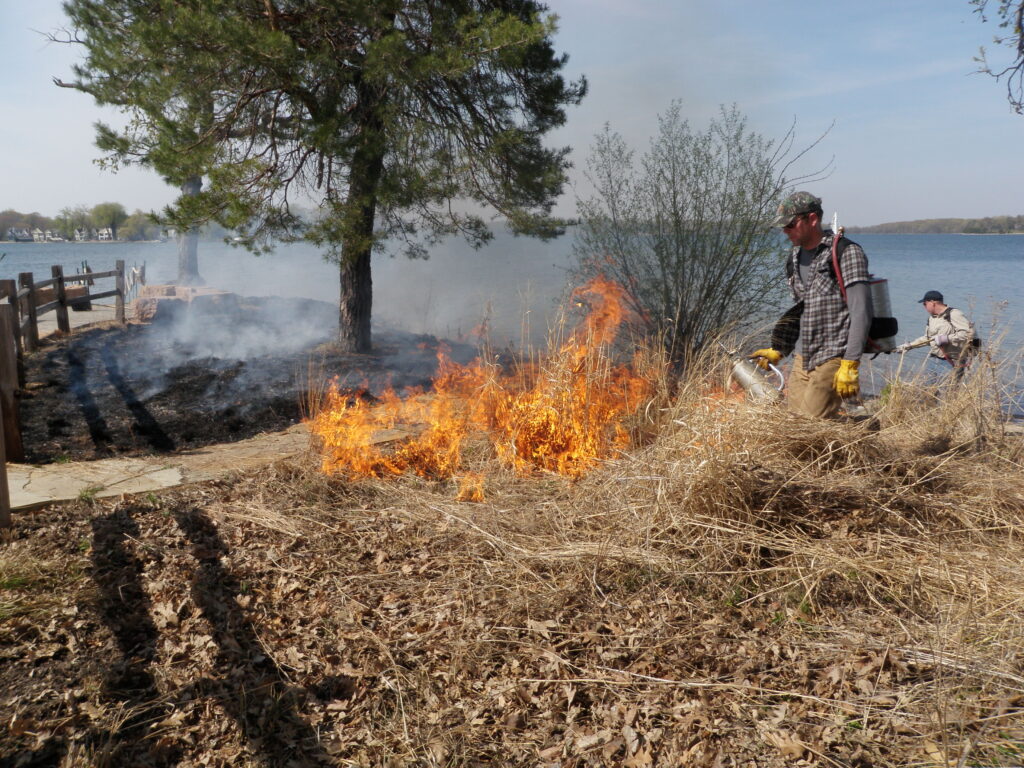
- Smoke and flames within the controlled area
- Numerous fire personnel or crews
- Equipment, such as heavy machinery, utility vehicles, hoses, and drones
- Temporary trail or area closures
It is important to avoid the prescribed burn area while crews are actively managing the fire and to carefully follow the instructions of any signage and directions from fire crews.

after burns
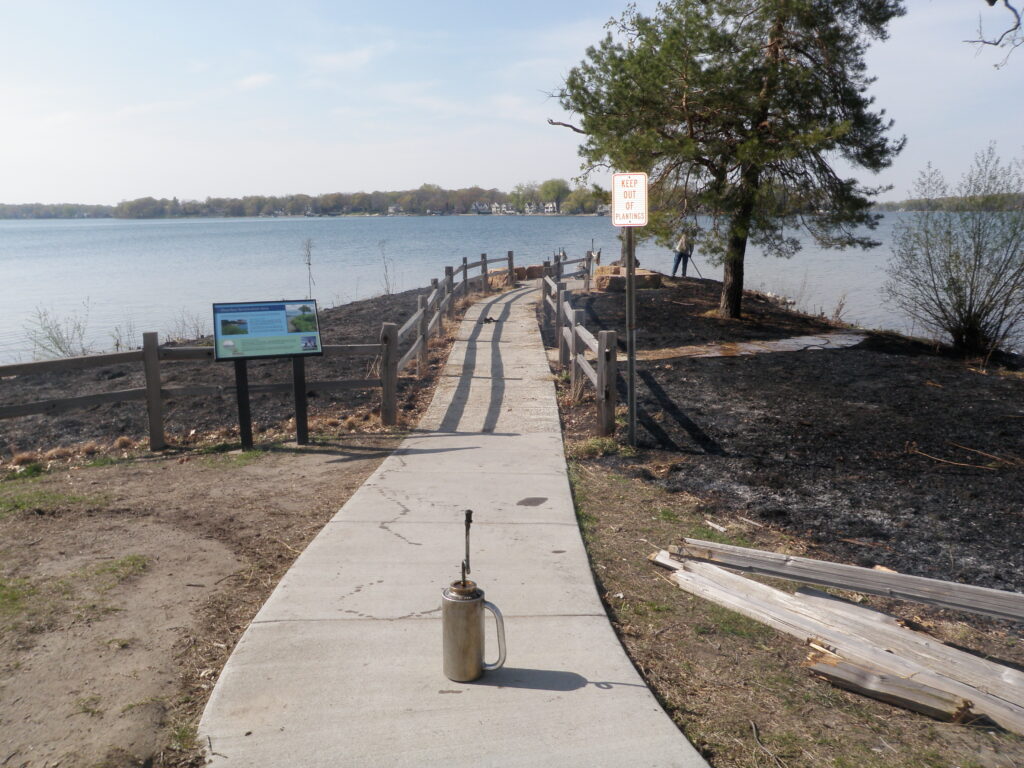
Immediately following a burn, the landscape will appear blackened or charred. This is a normal and temporary condition, and the area will begin to recover quickly, often within a few weeks. Depending on the scale of the burn, if public access is temporarily limited, trails typically reopen within a few hours to several days. Visitors should follow the posted onsite signage or contact MCWD if they are unsure about trail closures.
Reach Out With Questions or Concerns
For questions about the project:
James McDermond-Spies, MCWD Project Maintenance & Land Management Program Manager
FOR FIRE OPERATIONS AND CONDITIONS:
Red Rock Fire Services, Dispatch Operator
763-401-3909