East Auburn Wetland Restoration
Overview
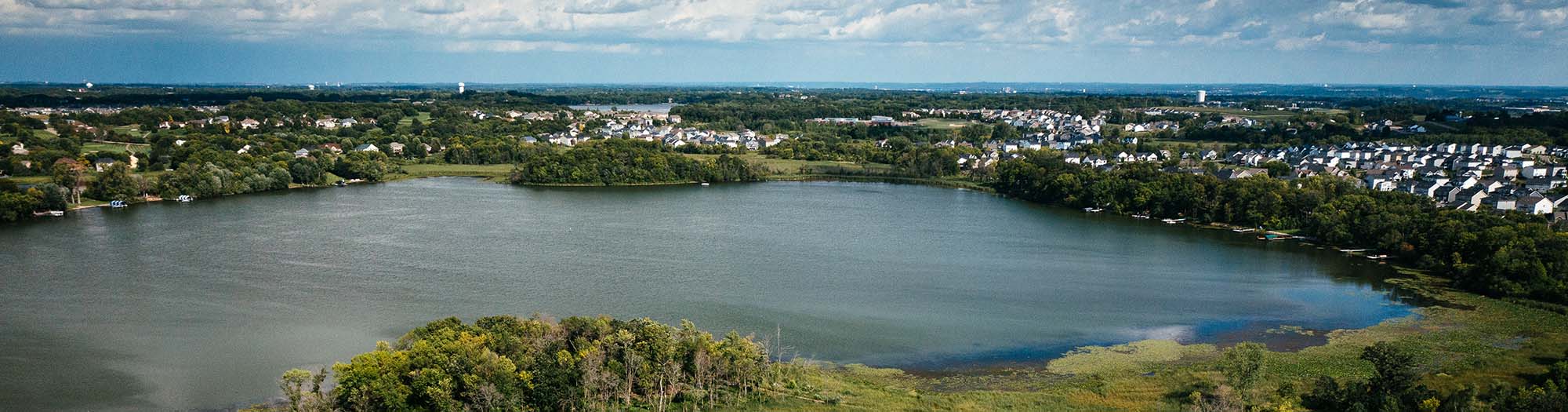
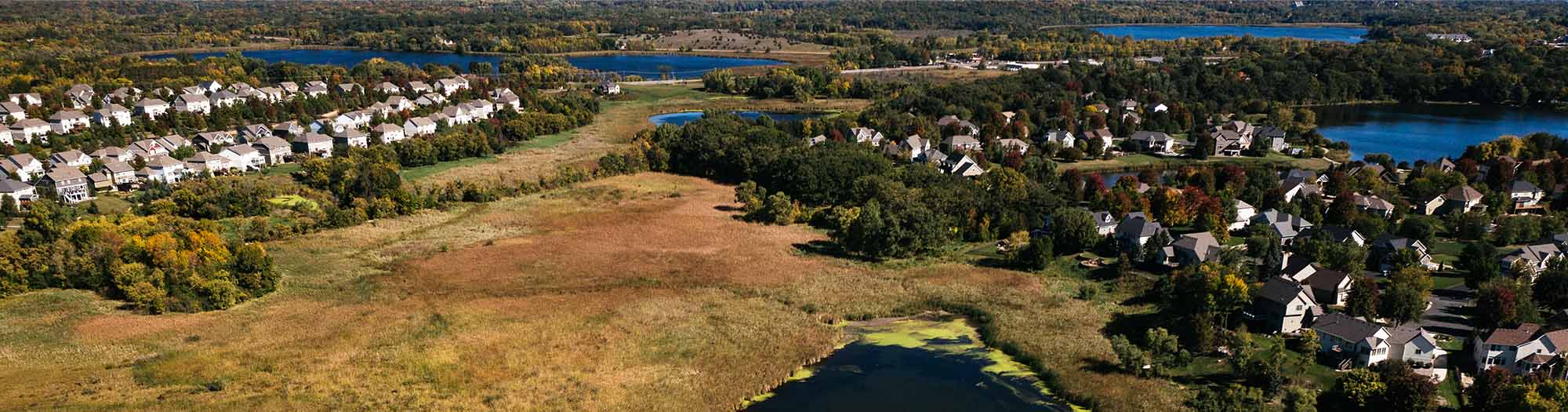
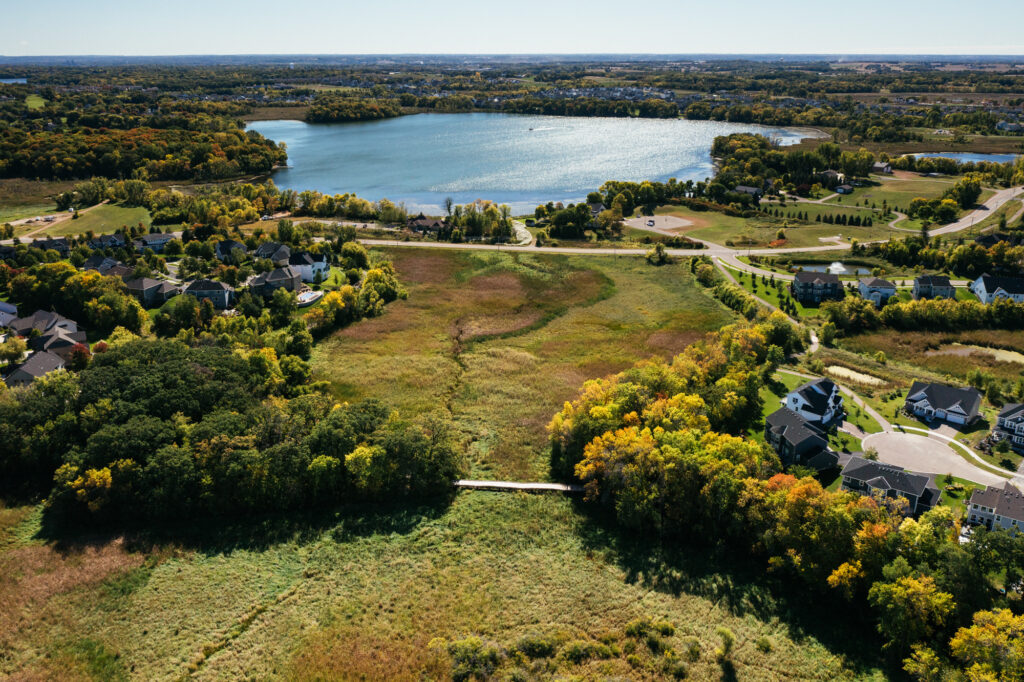
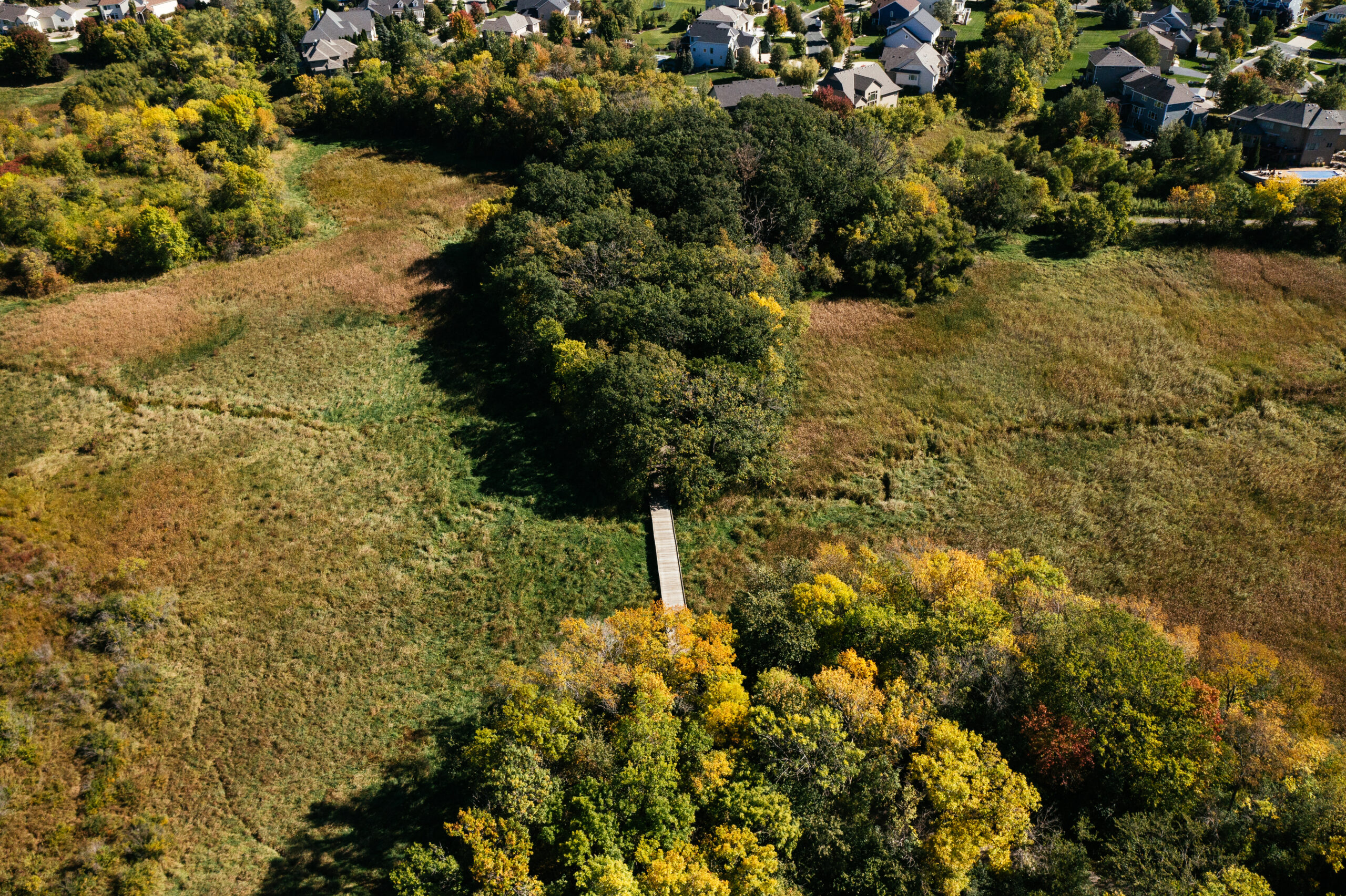
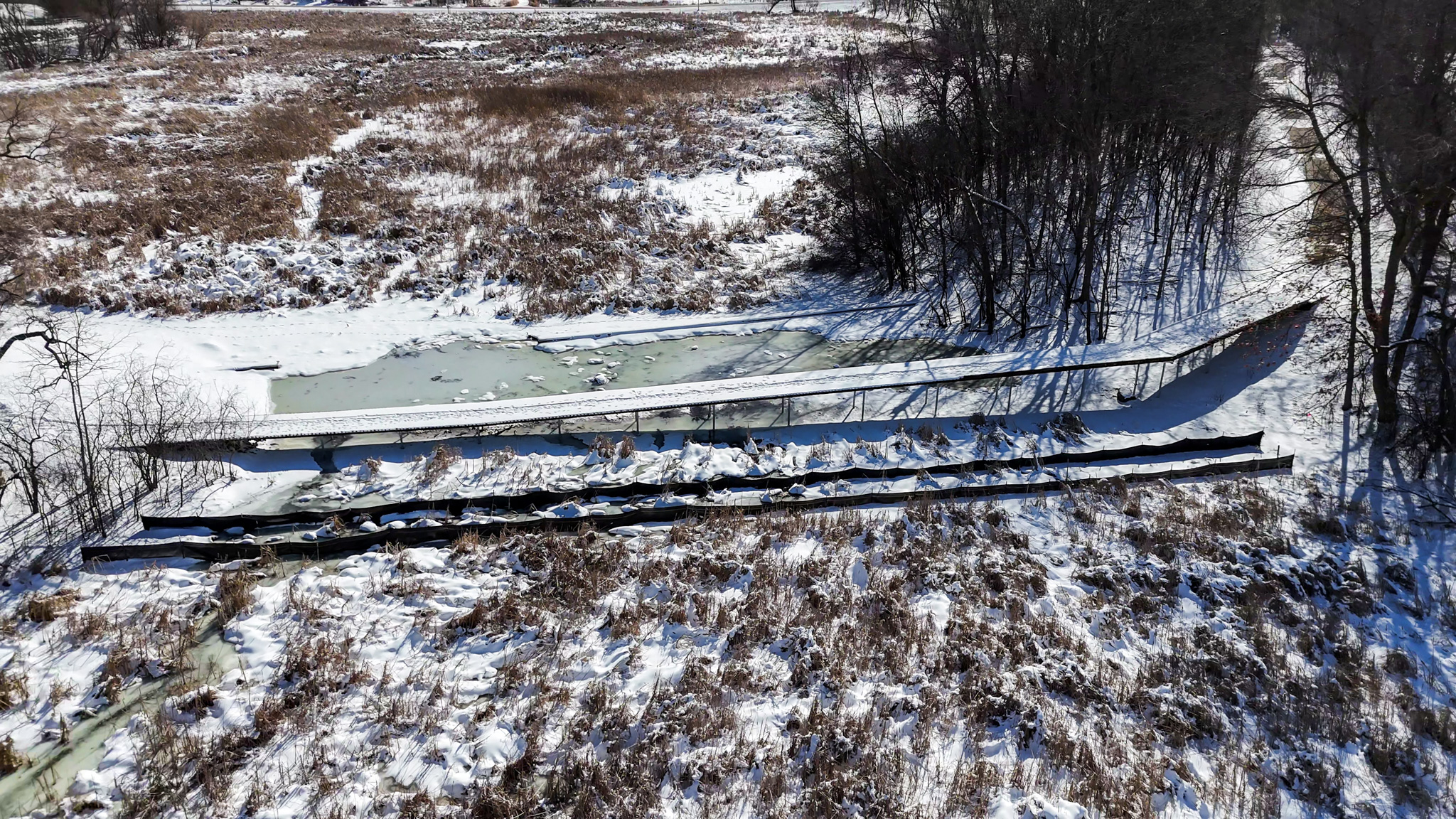
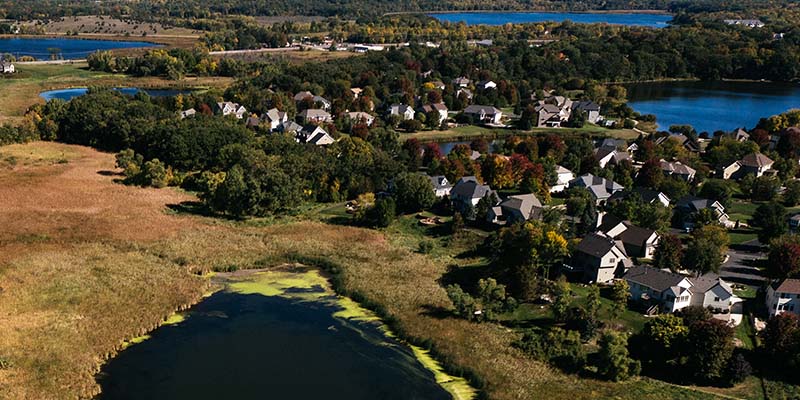
The East Auburn Wetland corridor is a system of wetlands originating at the outlet of Wassermann Lake and flowing north toward Highway 5 to the inlet of East Auburn Lake in Victoria. The wetland corridor includes part of Six Mile Creek and contains several types of wetlands. MCWD partnered with the City of Victoria to restore the East Auburn Wetland’s hydrologic function, improving water quality to downstream, impaired East Auburn Lake. The project included the installation of a sheet-pile weir to establish a more permanent pool of water in the wetland, which will reduce phosphorus loading downstream and improve wildlife habitat. Additionally, to improve user safety, MCWD and the City replaced the degraded boardwalk that crosses the wetland and connects to the City’s system of over 53 miles of trails and sidewalks.
MCWD has worked with the City of Victoria to improve water quality in many of the lakes in the Six Mile Creek-Halsted Bay Subwatershed, which is the headwaters of the Minnehaha Creek Watershed. Water quality improvements in this area will also impact water quality downstream. MCWD’s research and monitoring team determined that the water flowing out of the East Auburn Wetland has the highest nutrient loading in the corridor, making it a key target for a significant restoration in the area.
Project Updates
Summer 2026
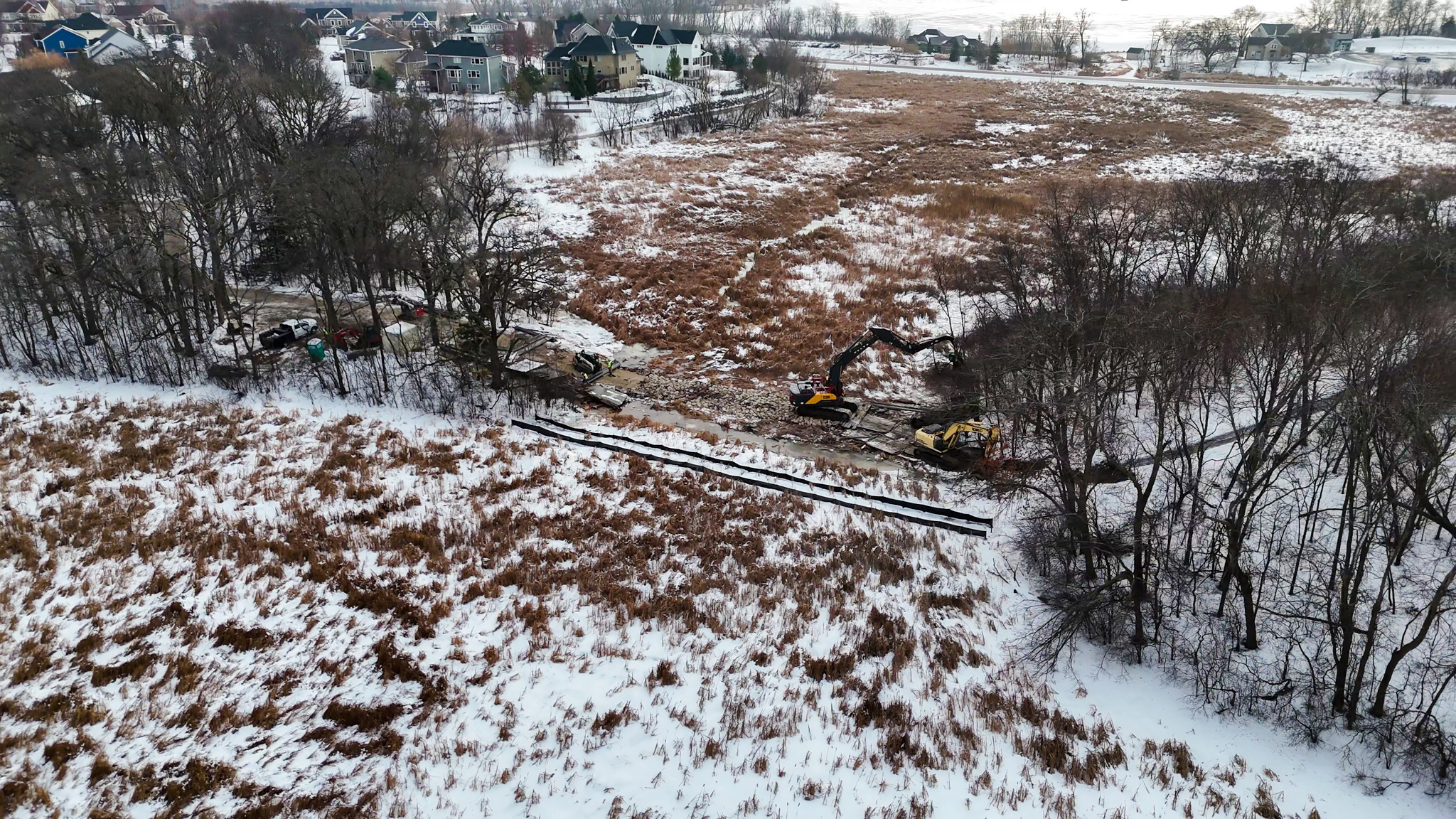
Construction of the wetland restoration is complete, with the installation of a sheet-pile weir. Crews also removed invasive species, such as common buckthorn, and planted native species.
The pedestrian boardwalk crossing the wetland was also replaced. While substantially complete, the boardwalk will remain closed until the City installs a handrail to enhance user safety. Visit the City’s website for updates on trail closures.
Sign up for the Six Mile Creek-Halsted Bay area newsletter to receive updates on this and other area projects!
Project Timeline

Planning Phase
Planning Phase
2022 – Planning phase begins
December 2022 – MCWD’s Board of Managers authorizes a contract to conduct feasibility with Resolution 22-085
Summer 2023 – Feasibility study conducted
March 2024 – MCWD’s Board orders the project and authorizes to release a request for proposals for design and engineering services with Resolution 24-015
Winter 2024 – Planning phase ends

Design Phase
Design Phase
May 2024 – MCWD’s Board authorizes a design contract for the East Auburn Wetland Restoration with Resolution 24-032
2024 – Design phase begins
Summer 2024 – The project reaches 30% design
Winter 2024-2025 – Consultants complete a geotechnical analysis of the site
February 2025 – MCWD’s Board of Managers receives a briefing on the project’s 60% design
March 2025 – MCWD hosts a public meeting on the project design
April 2025 – MCWD’s Board of Managers approves the project’s 90% design
2025 – Design phase ends

Construction Phase
Construction Phase
August 2025 – MCWD’s Board authorizes a construction contract for the East Auburn Wetland Restoration with Resolution 25-042
January 2026 – Construction phase begins
March 2026 – Construction phase ends
Project completion
Project Completion
2026 – Project completed
By the Numbers
45
pounds
in annual phosphorus reduction targeted
11
acres
of wetland restored
Project Highlights
- Wetland restoration
- Wildlife habitat restoration
- Nutrient reduction in East Auburn Lake
- New pedestrian boardwalk
All metrics anticipated upon completion.
Partnership
MCWD will work with the City of Victoria to restore the East Auburn wetland, continuing an impactful partnership that has yielded many projects in the Six Mile Creek-Halsted Bay Subwatershed.

Funding
Project Cost: $600,000
Funding for the East Auburn Wetland Restoration is supported by MCWD’s levy, as well as contributions from the City of Victoria.